Arable Farming
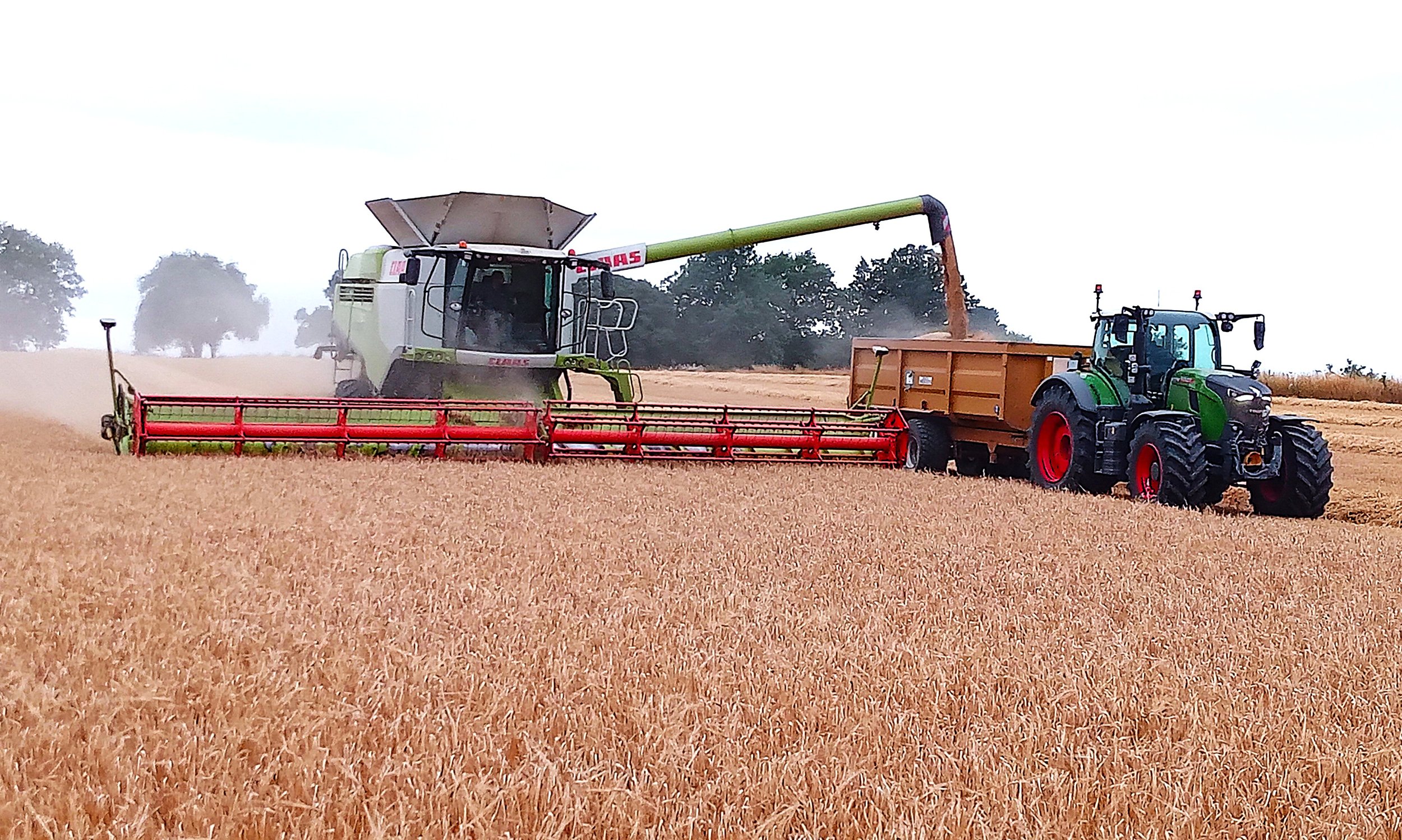
Harvesting spring barley
We are very interested in improving our soil health and as part of this philosophy we try and grow an overwinter cover crop before spring sown crops to reduce soil erosion and loss of valuable nutrients from winter rain wash out on our sloping soils with shallow top soil over chalk. We also regularly grow a companion crop with the cereal crops to aid biodiversity and improve the way our soil functions. Both cover and companion crops help us to improve our soil organic matter levels that help feed the diverse soil fauna including worms , fungi and bacteria .Do see more detail in the soil health section.
We carefully assess the crops needs and adjust the applications of fertilisers, and weed and fungi controlling agrochemicals to just what is needed. We have not used any insecticides for many years and rely on the rotation of crops and our natural predatory insects to minimise insect pests. The section on Beetle banks and Hedges has more detail on how we encourage natural predators and pollinators.
Sowing wheat into a bean stubble
Downland Farming is primarily an arable farm growing mainly cereal crops. The key crops are wheat and barley in a rotation with legumes (clover and beans) and oilseed rape crops.
By rotating crops in a planned rotation, we minimise cereal diseases and the build-up of weeds. The legume crops add nitrogen nutrient and with their deep roots maintain soil structure. The actual crops grown in any one year vary with the economic factors and at present we are chiefly using a rotation of 2 clover crops in succession followed by a wheat and then a barley, before returning to clover or beans.
The wheat is mostly sold for human consumption going into bread or biscuit flours. The barley crops are aimed at the malting market going into the brewing industry for beer. If the weather conditions are poor at harvest both the barley and wheat may go as animal feed.
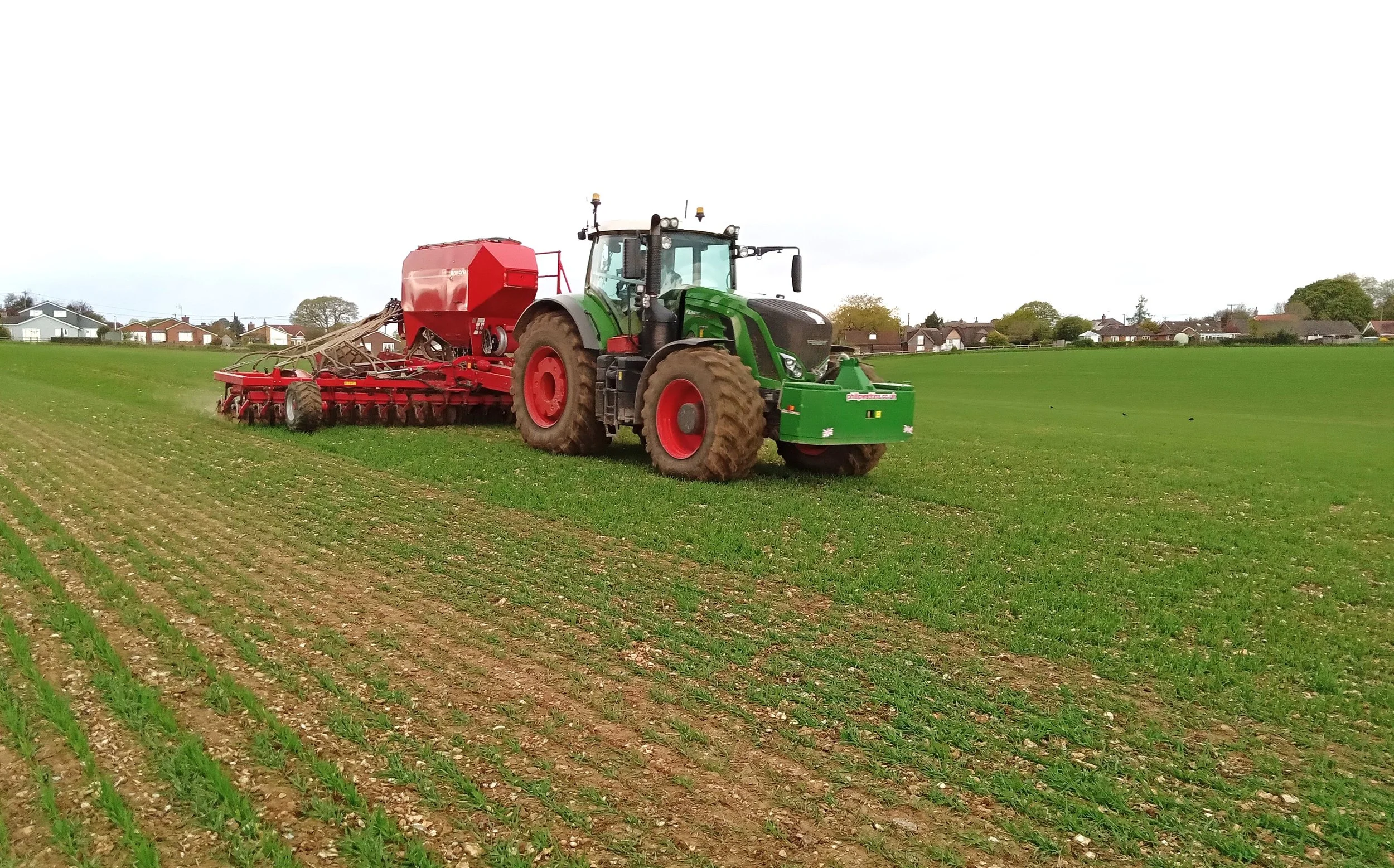
Sowing a companion crop into a spring barley crop
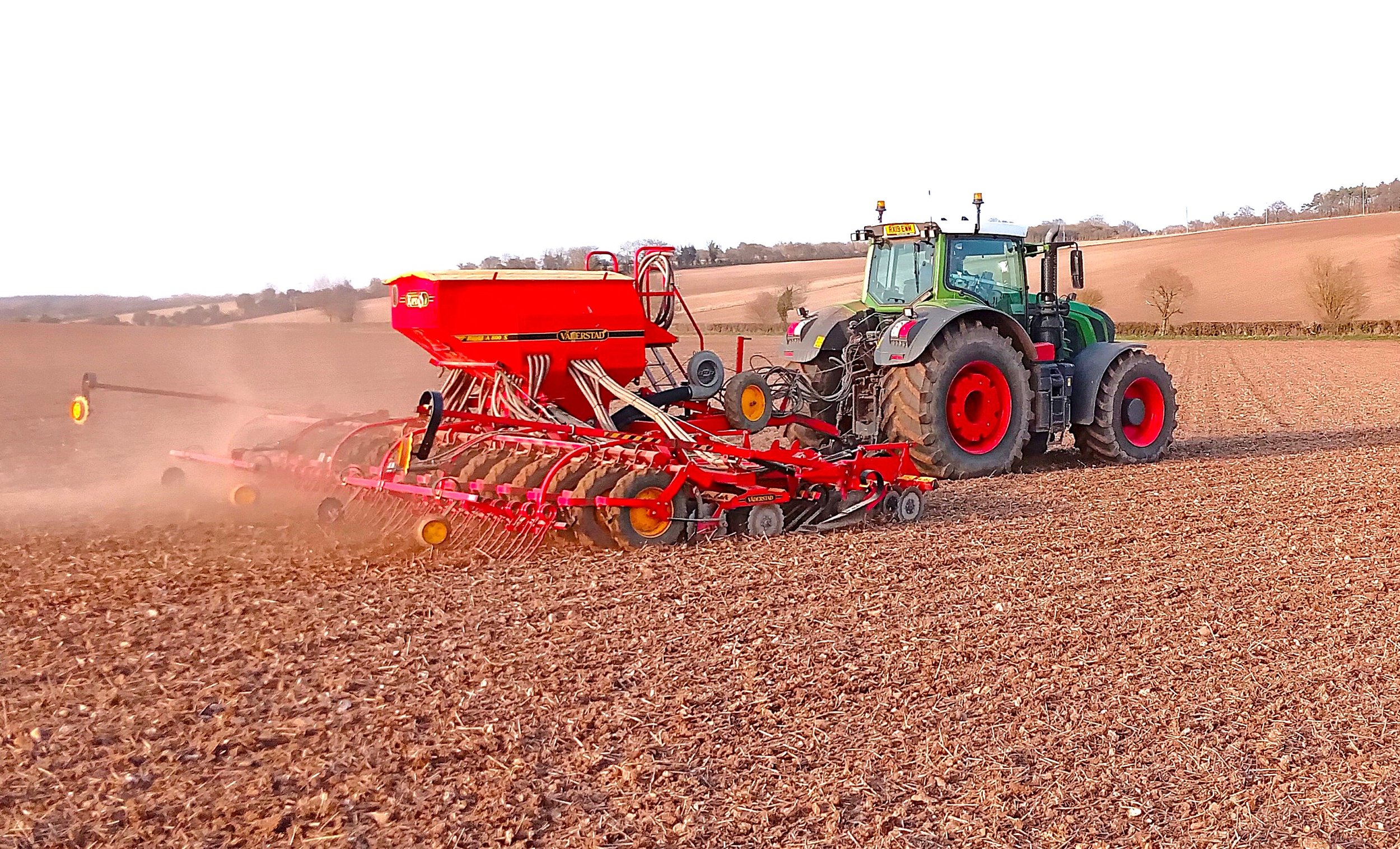
We have not ploughed or deep cultivated our soils for several decades. Where we can we direct sow all crops with no soil movement. Using a disc direct drill avoids disturbing the soil thus minimising carbon release into the atmosphere and prevents damage to worms and soil fungi and soil microbes.
Much of field work with machinery is done by a contractor. The cost of large and modern machinery we see as too expensive for a farm of our size. The contractor works for many farms and can spread the cost of modern large-scale machinery over a wide area.
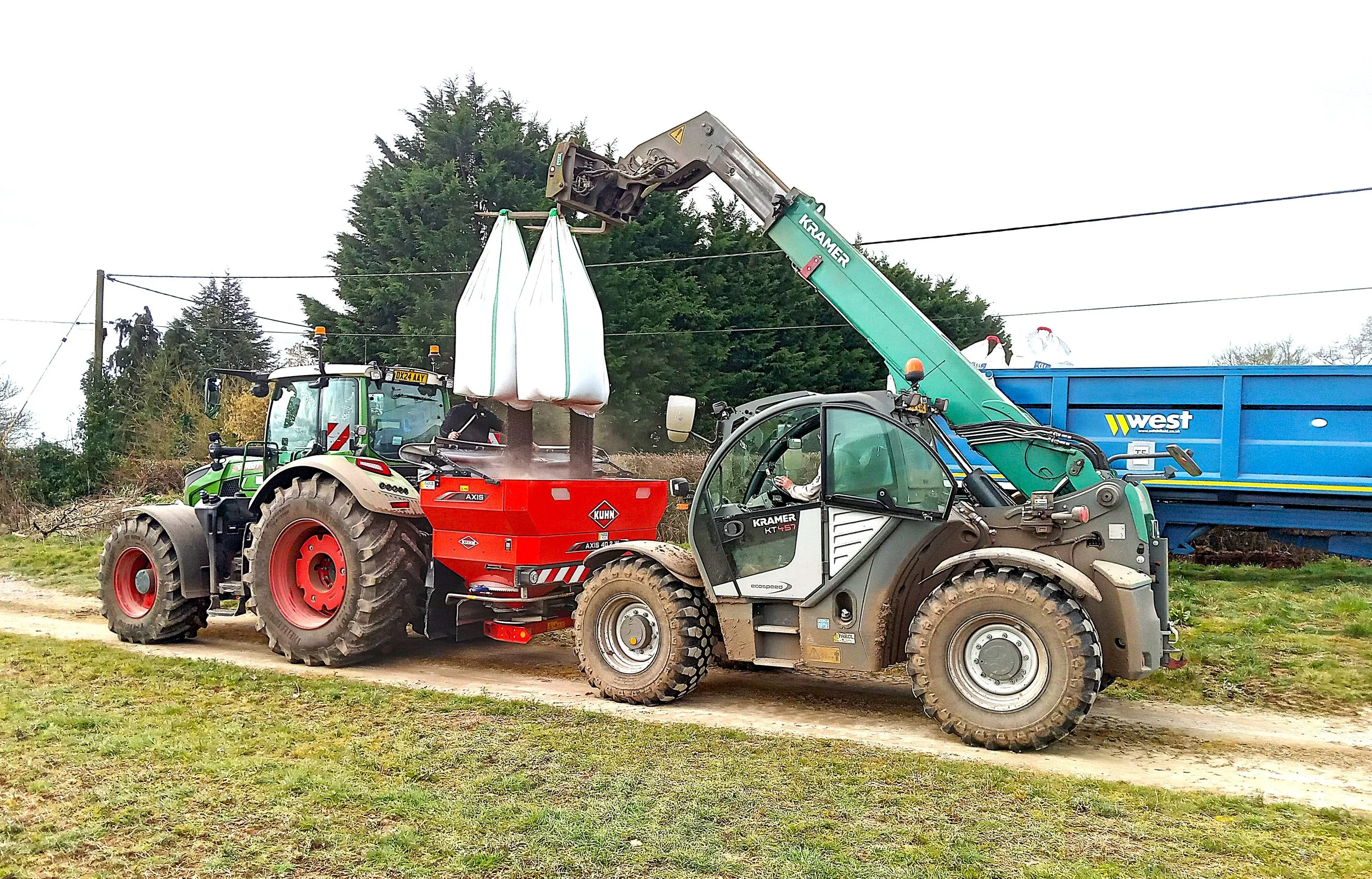
Loading fertiliser into a spreader
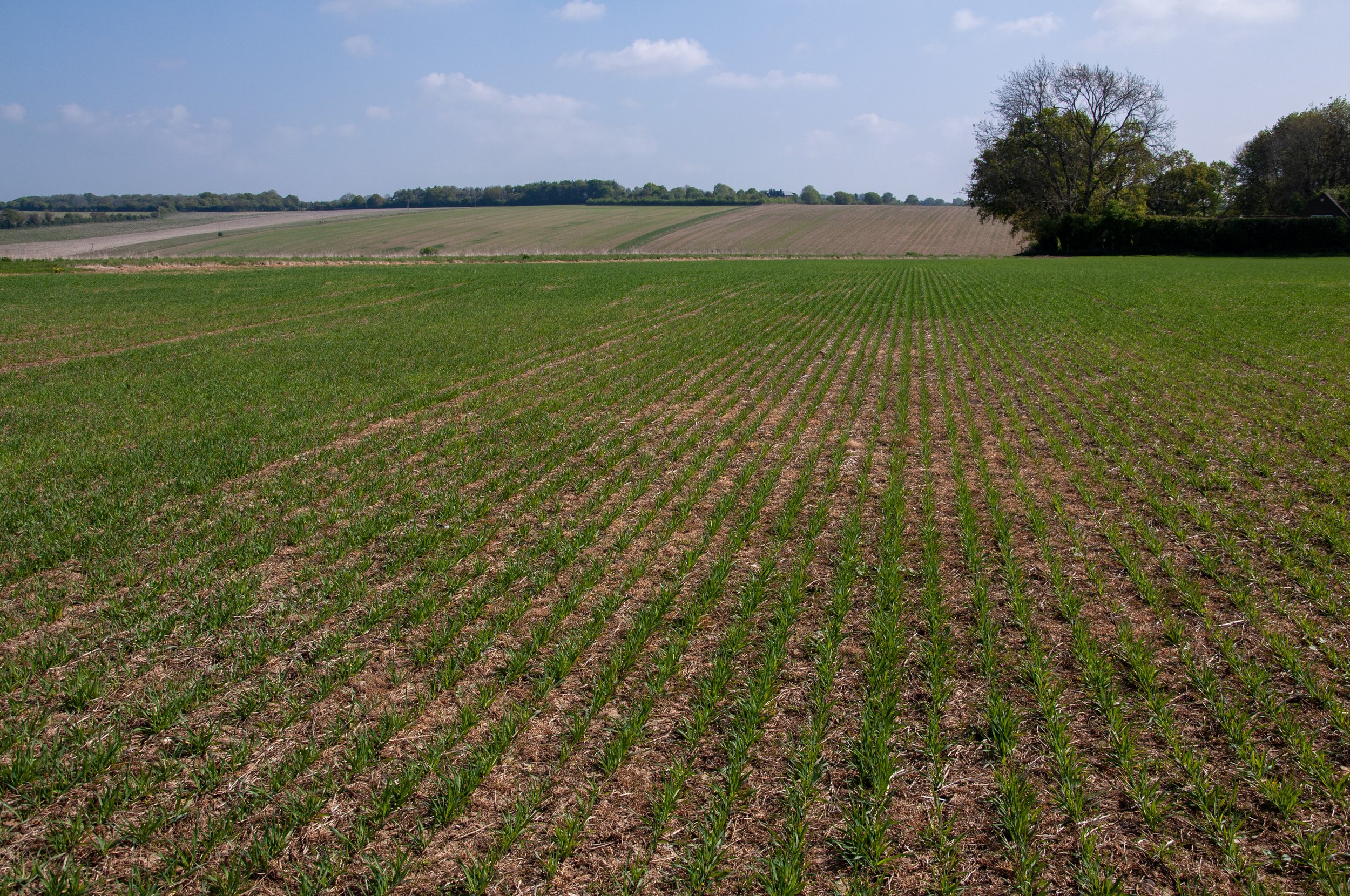
A spring barley crop in April
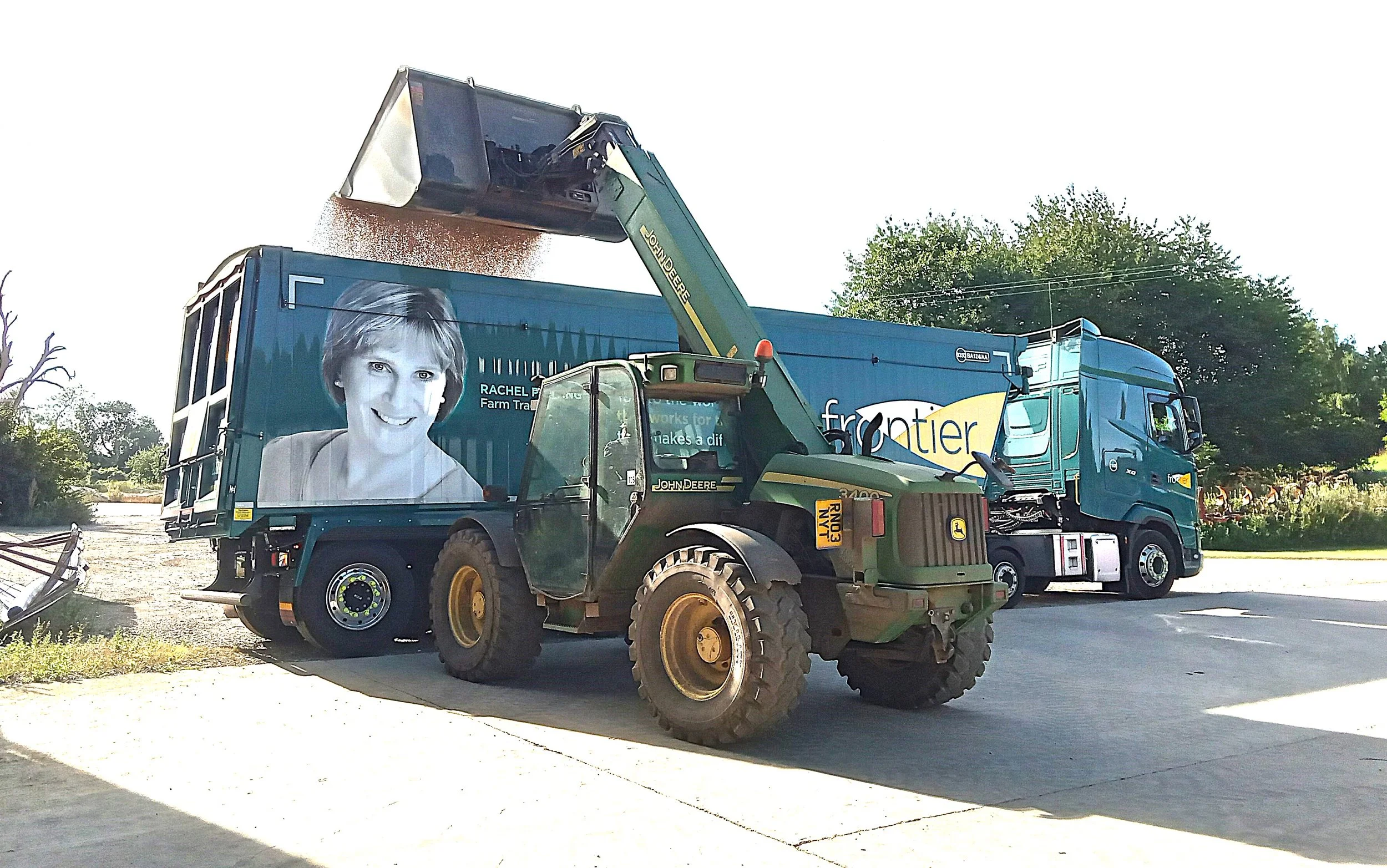
Loading barley grain for sale