Planting a native woodland

Apple trees next to a new hedge
On the farm as part of our wish to improve biodiversity we have planted a small deciduous woodland. The site was chosen because it is a less productive field corner. The trees are protected from rabbits with tree guards. They were so popular with deer who were eating them that we had to plant a high deer fence fully around the wood.
We particularly chose native species of trees. The taller trees are in the middle of the wood which is surrounded by smaller shrub type species. The species chosen include oak, hornbeam, field maple, silver birch, alder, hawthorn, wild cherry and hazel. These native species of hardwoods are slower growing than softwoods like pine trees.
Hedges
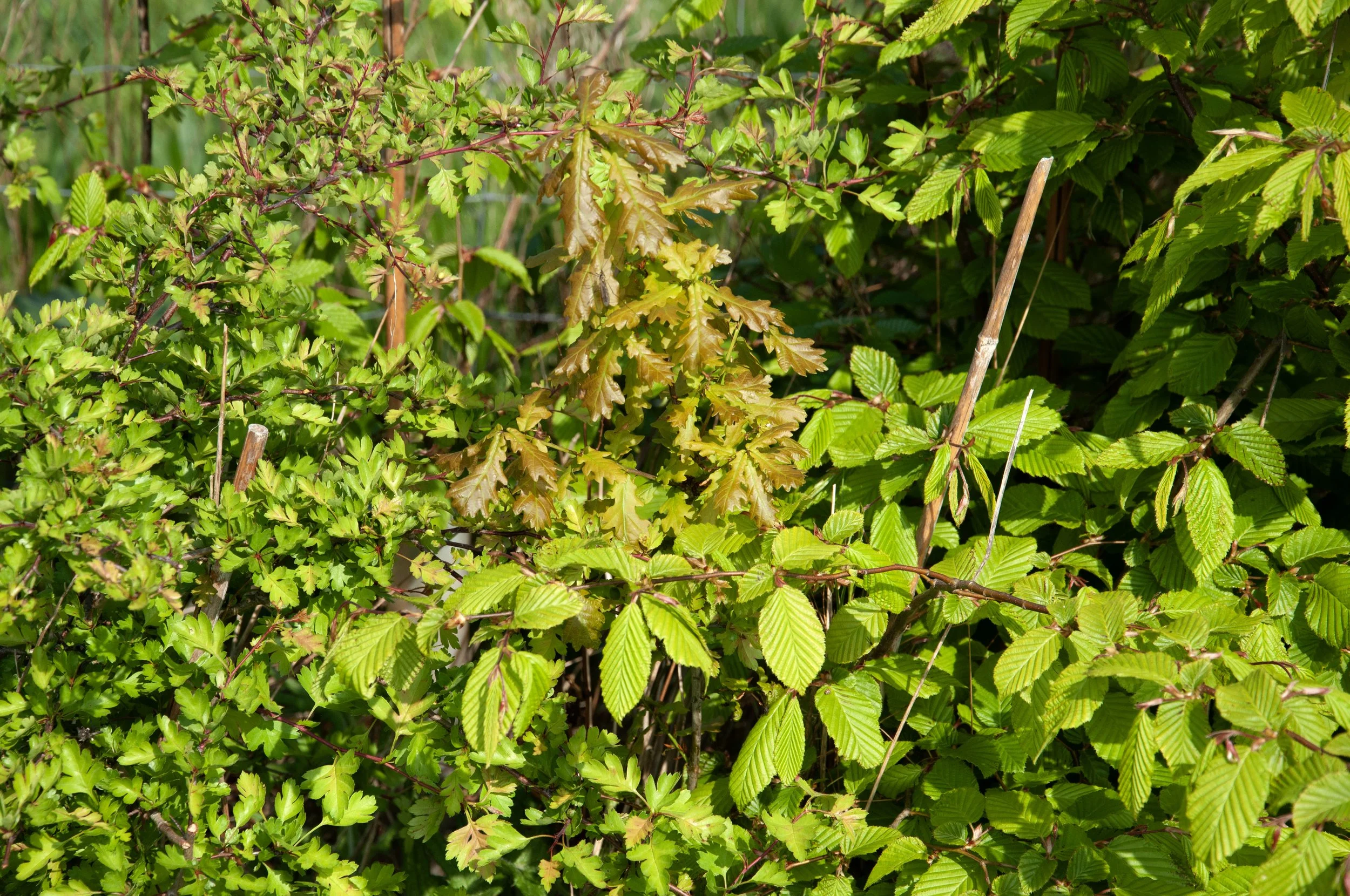
Young hedge- Hawthorn, Oak and Hornbeam
Hedges are lines of shrubs and trees which are managed. They are important for supporting wildlife besides forming boundaries around fields. We have increased the number of hedgerows to encourage more wildlife. The shrubs provide a habitat for insects including pollinators, predators, birds and small mammals. In connecting with existing hedgerows, the hedges create wildlife corridors to enable creatures to safely move across the landscape.
The hedge plants we have chosen include hazel, hawthorn, dogwood, guelder rose, blackthorn, hornbeam, dog rose and white willow. The young plants are interspersed with trees including wild cherry and oaks. The fruits growing in the hedgerow provide food in the form of flowers, nuts and berries for animals and birds. The birds enjoy the berries in the autumn and winter.
Hedgerow trees play an important role in providing shelter for wildlife in addition to cattle and crops in neighbouring fields. Trees can provide a different habitat to encourage larger birds like owls. Predatory insects living in the hedges help to protect crops from pests. Humans have a long history of using hedgerow fruits for food for example blackberries, sloes and their wood for fuel.
Careful management means they are cut later in winter rather than in autumn to allow birds to forage for food. We have noticed grey partridges and pheasants using the hedgerows for shelter.
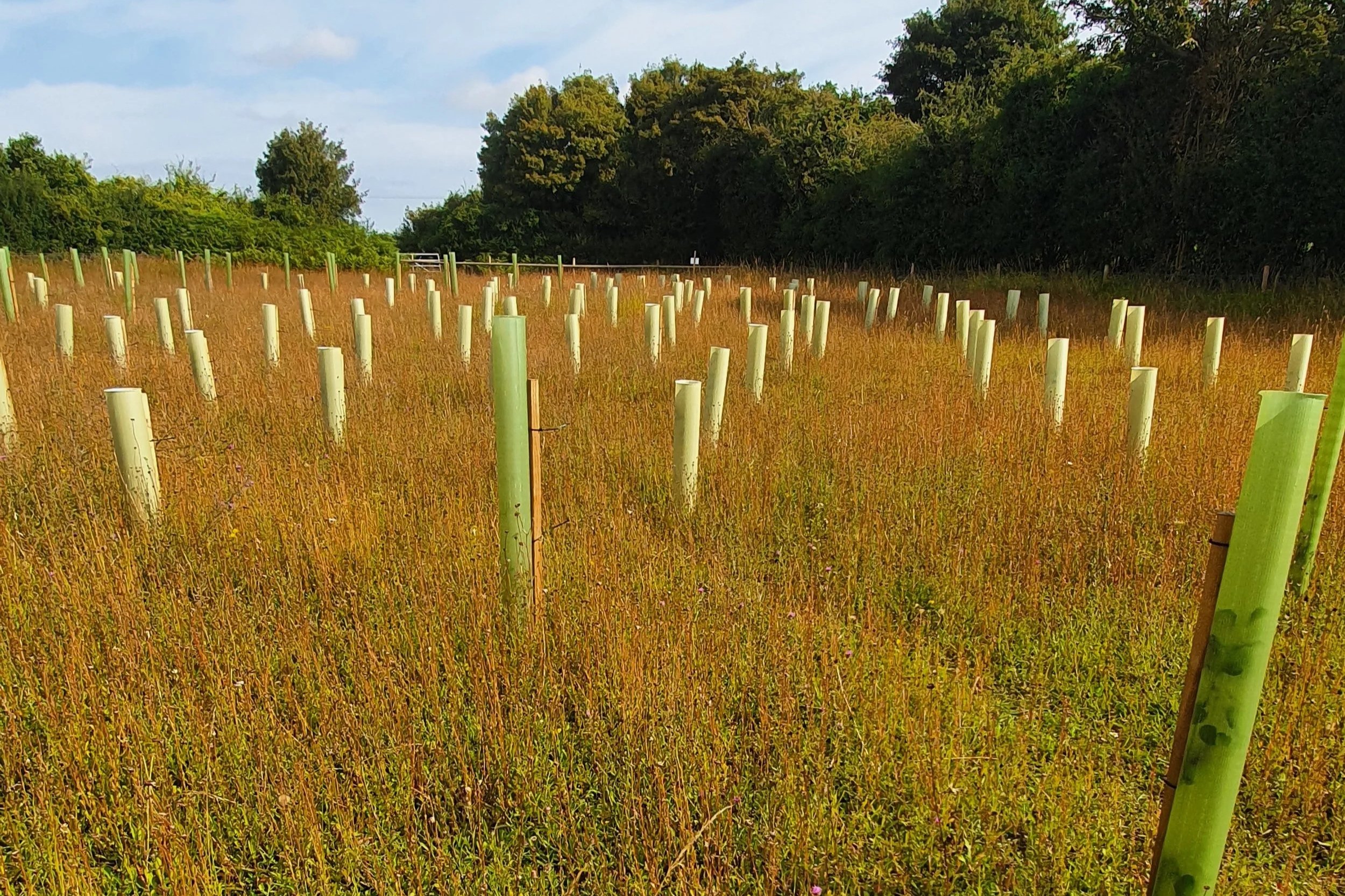
New woodland
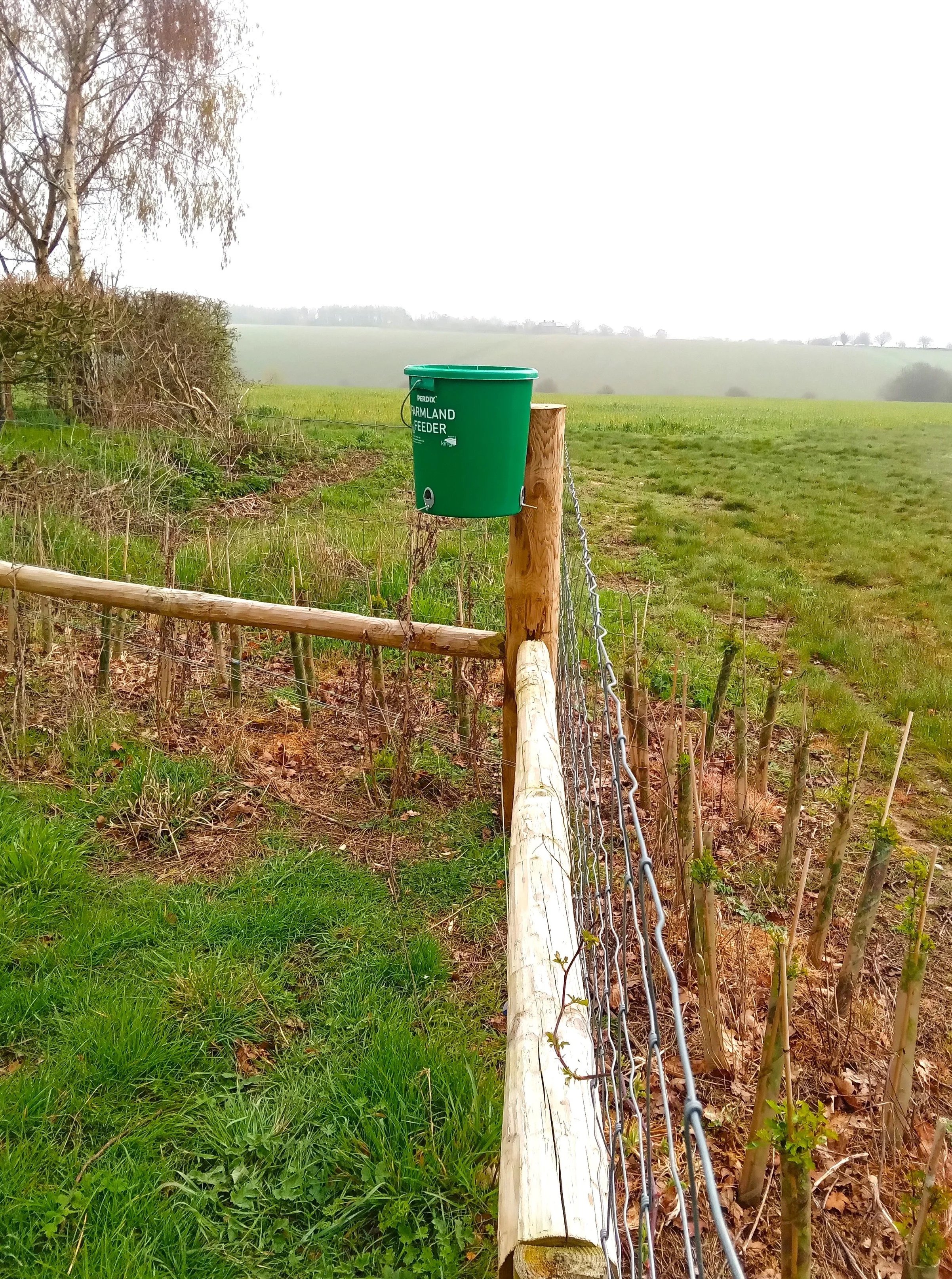
Young hedge with a bird feeder
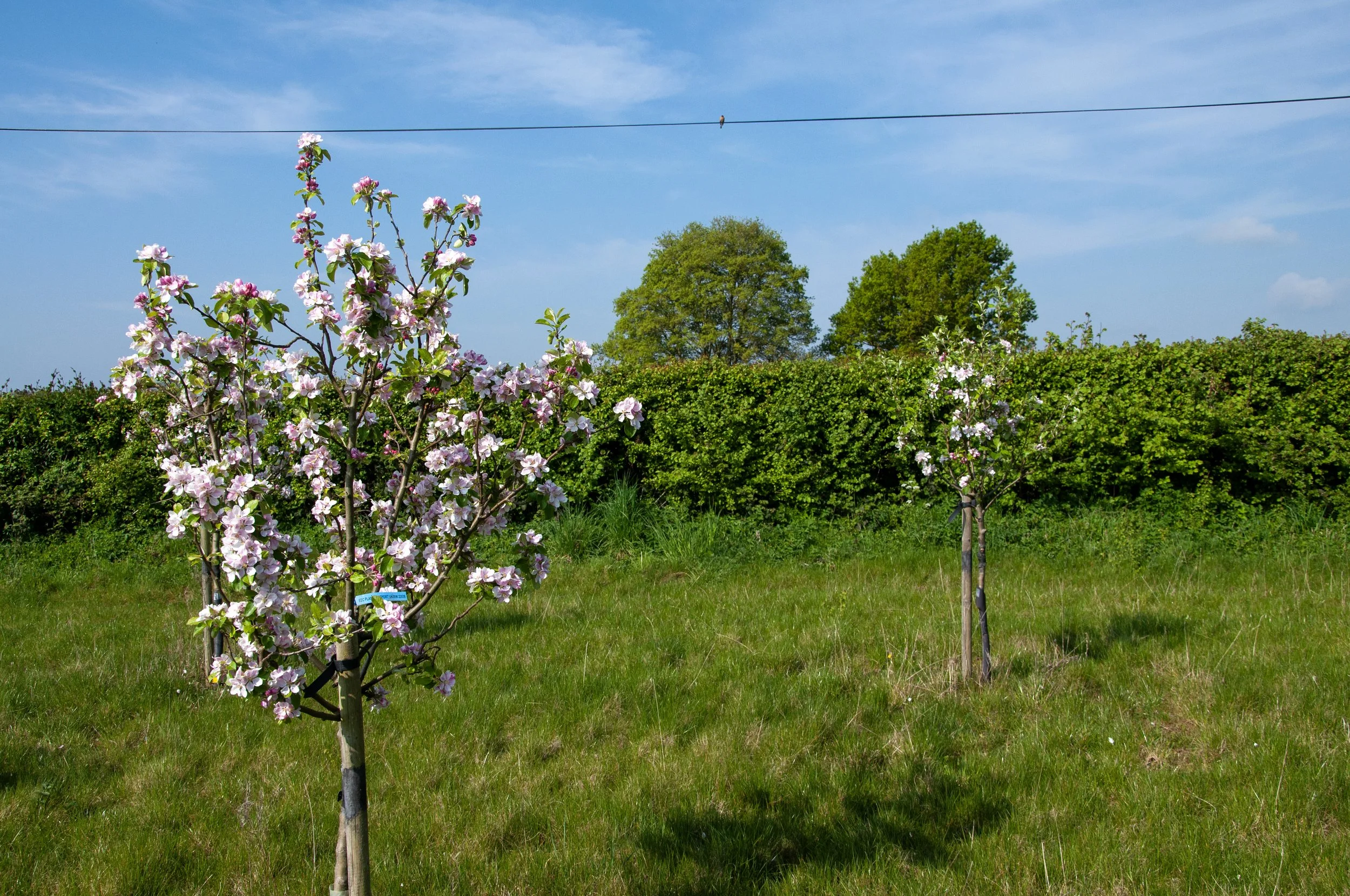
Apple trees
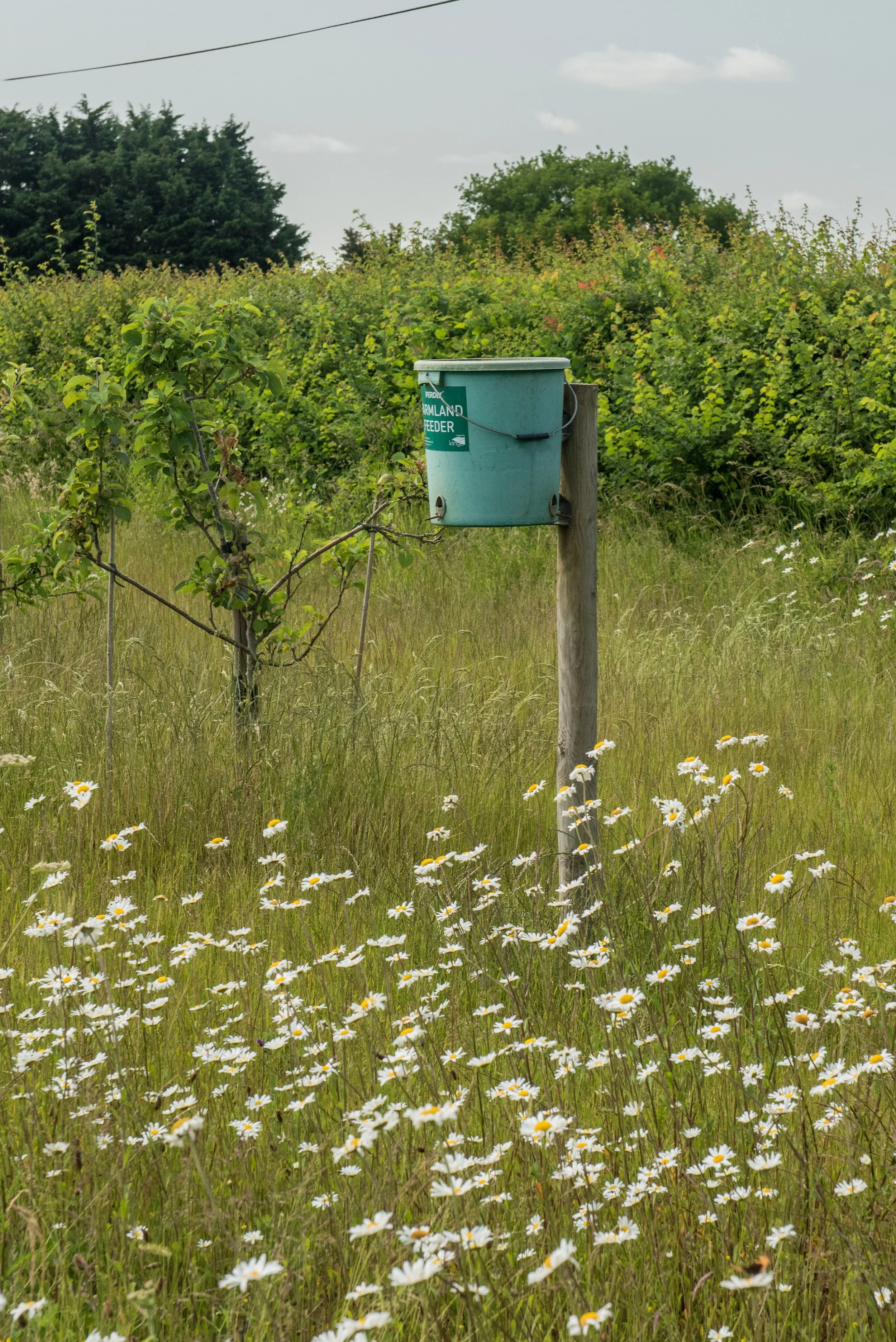
Bird feeder
-
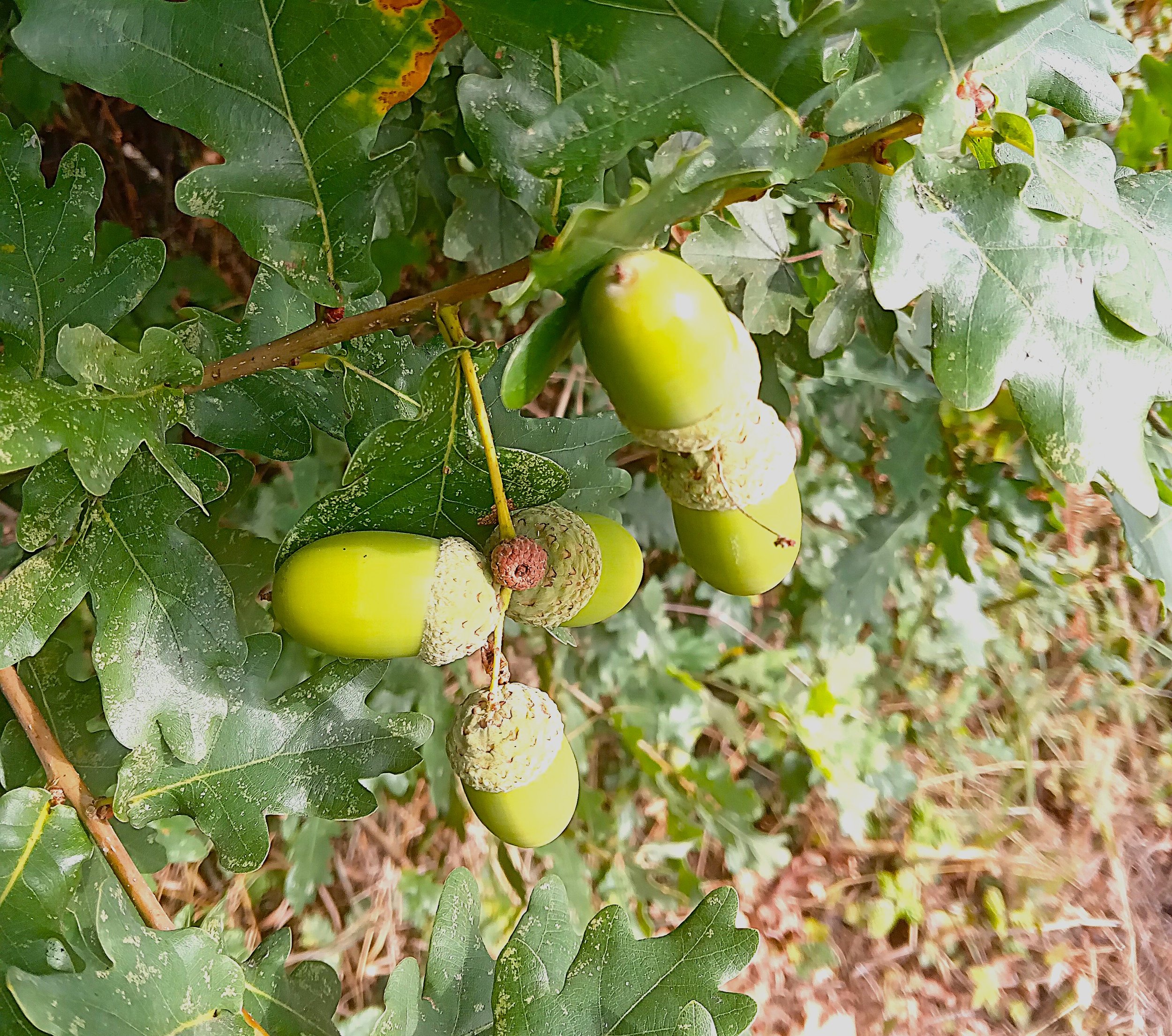
Acorns
-
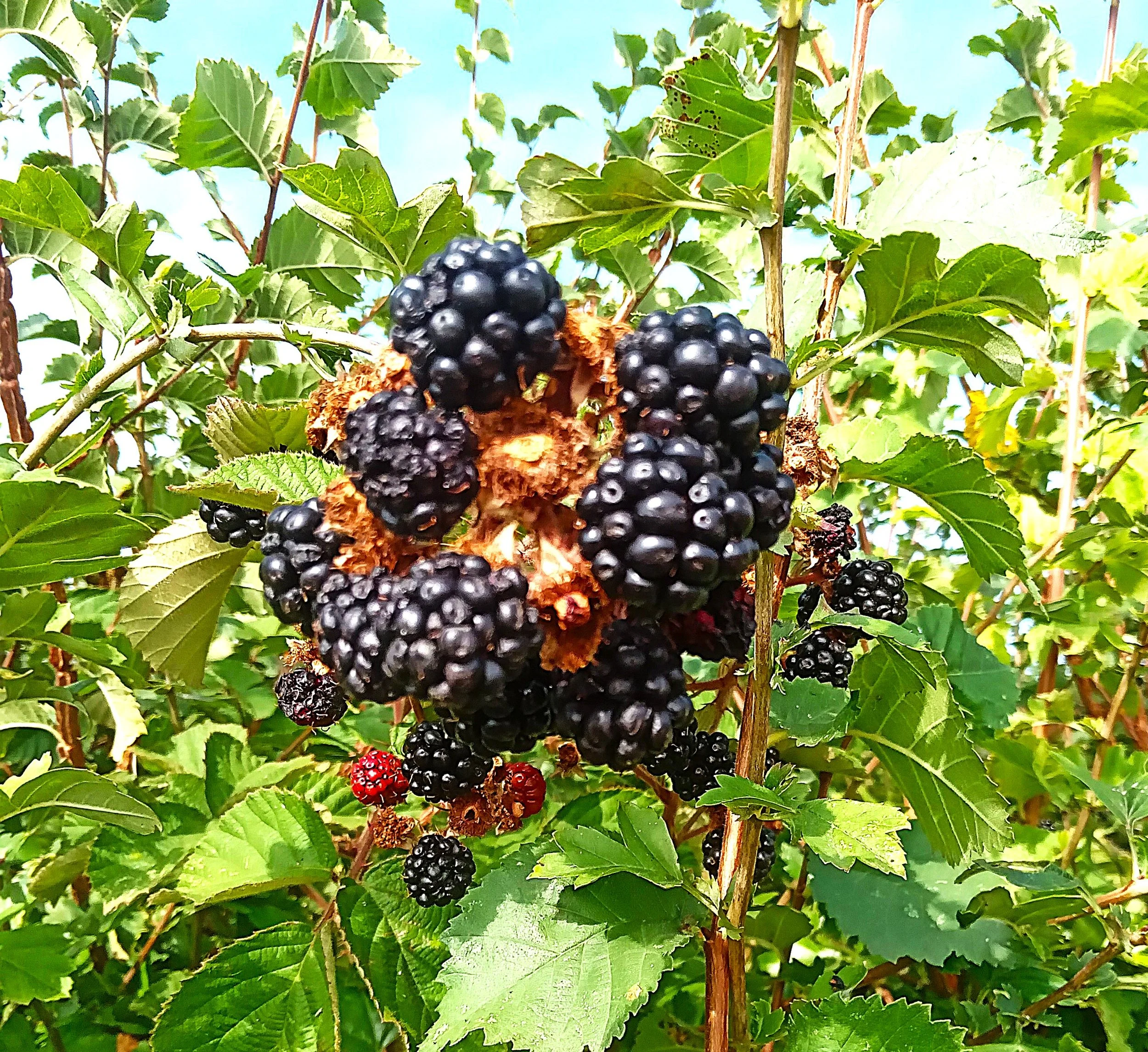
Blackberries
-
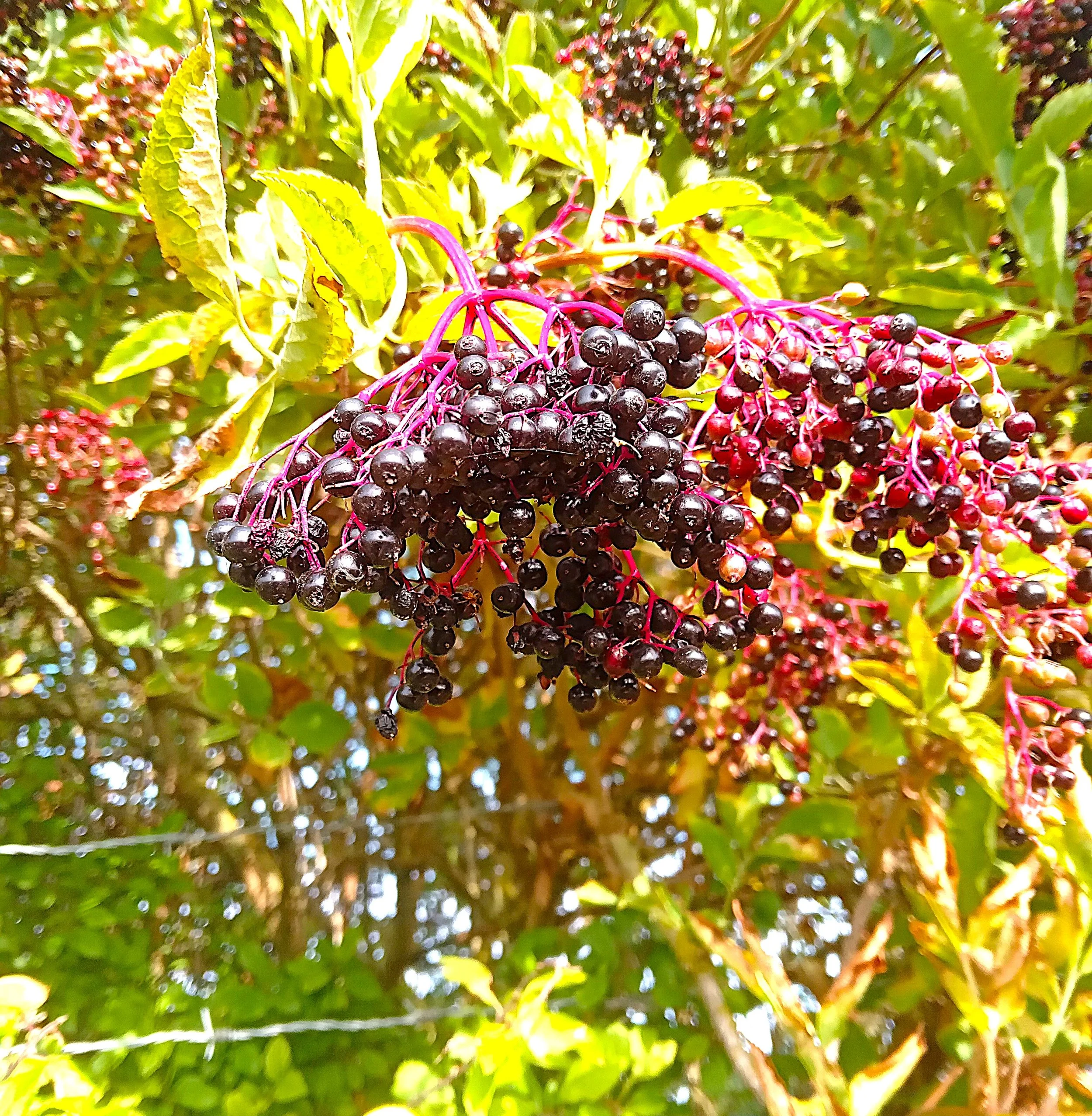
Elderberries
-
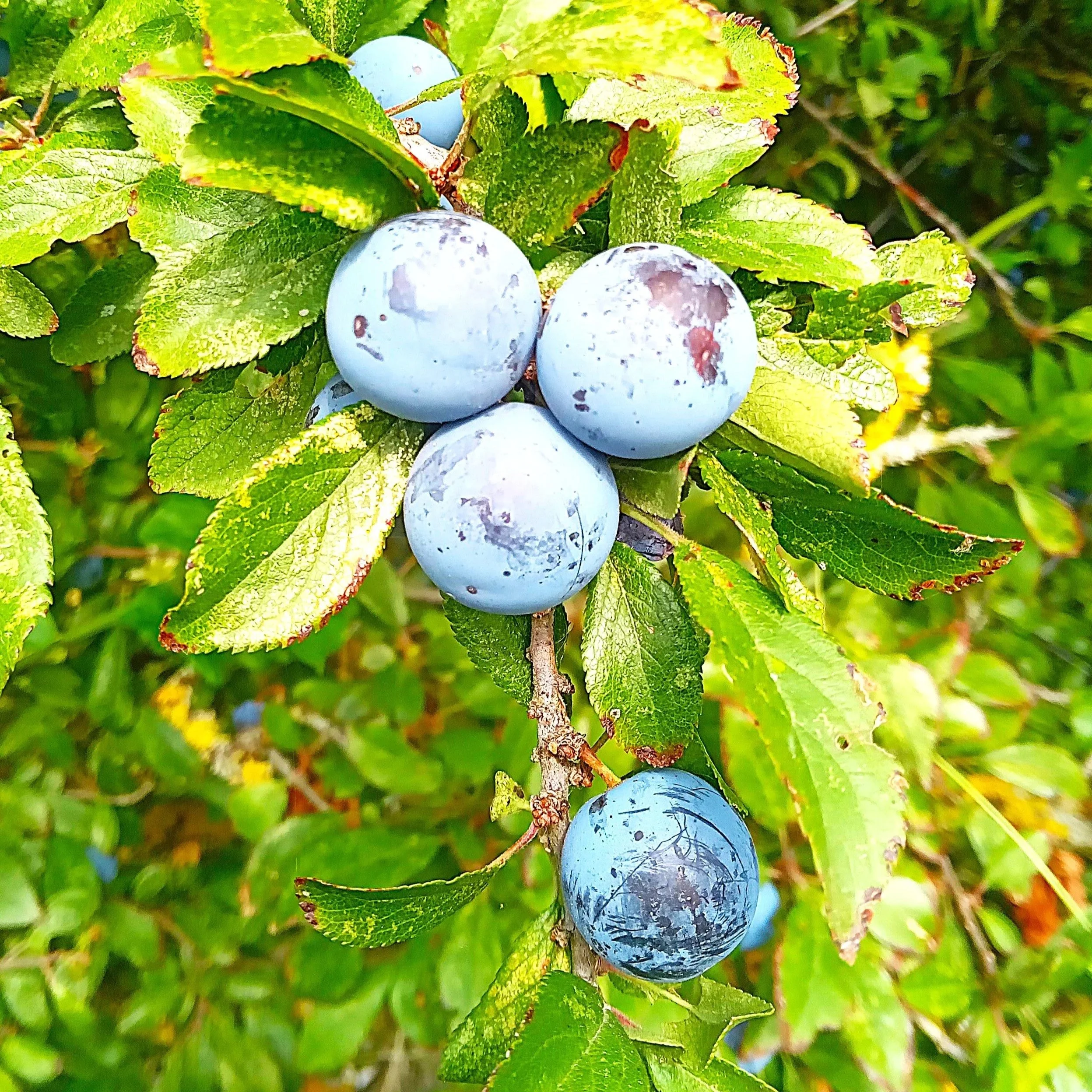
Sloes
-

Crab Apples
-
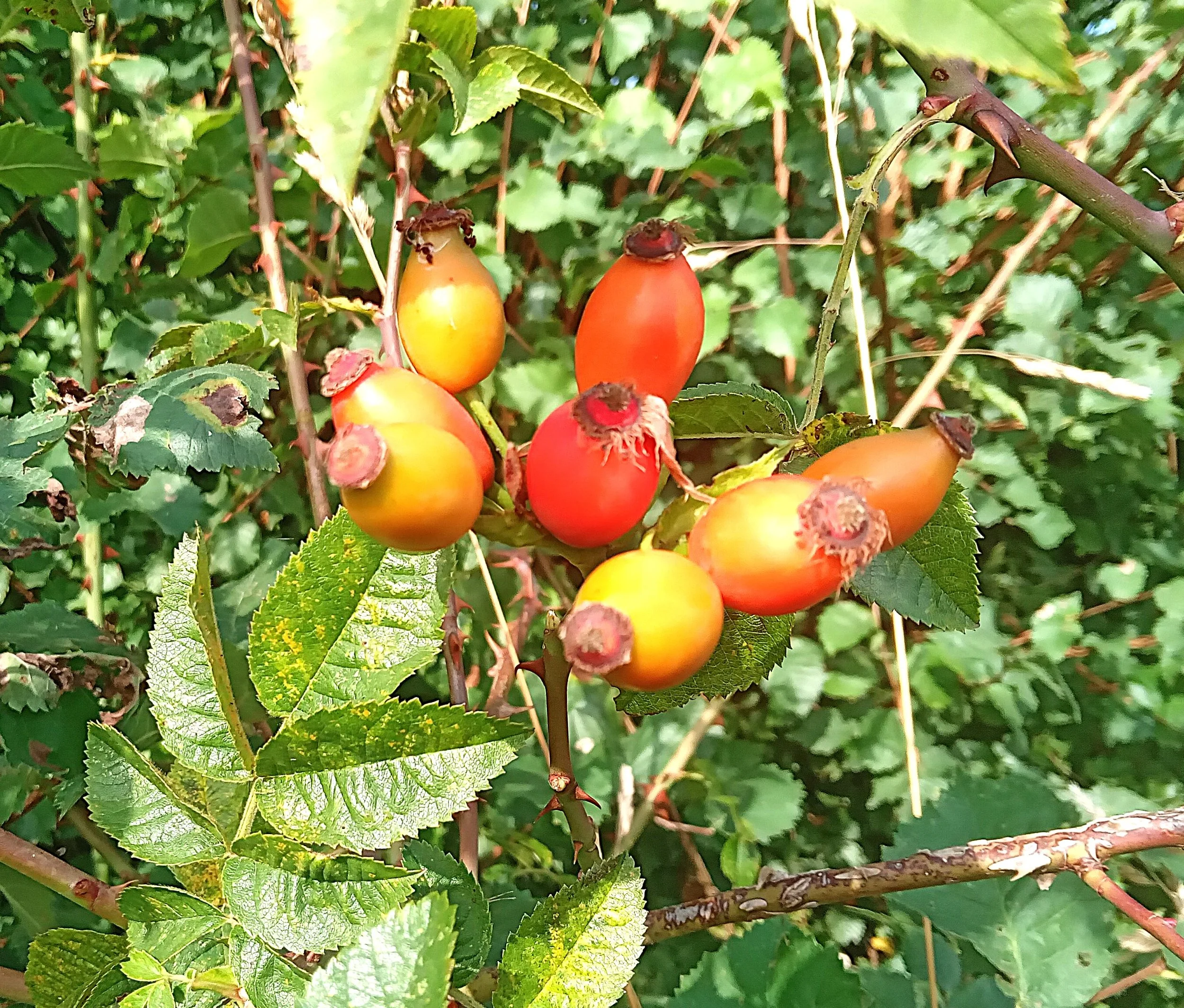
Rose Hips
-
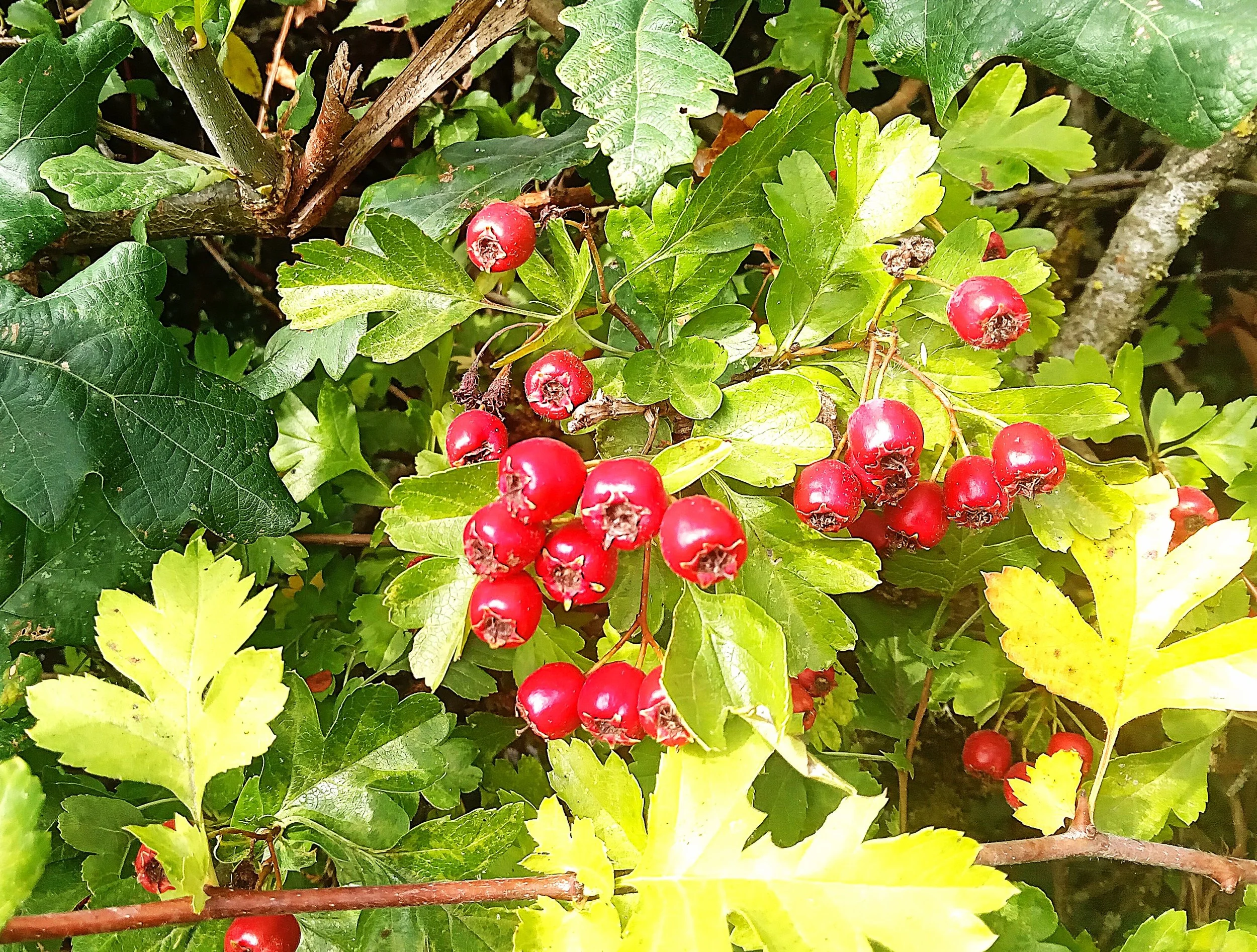
Haws
-
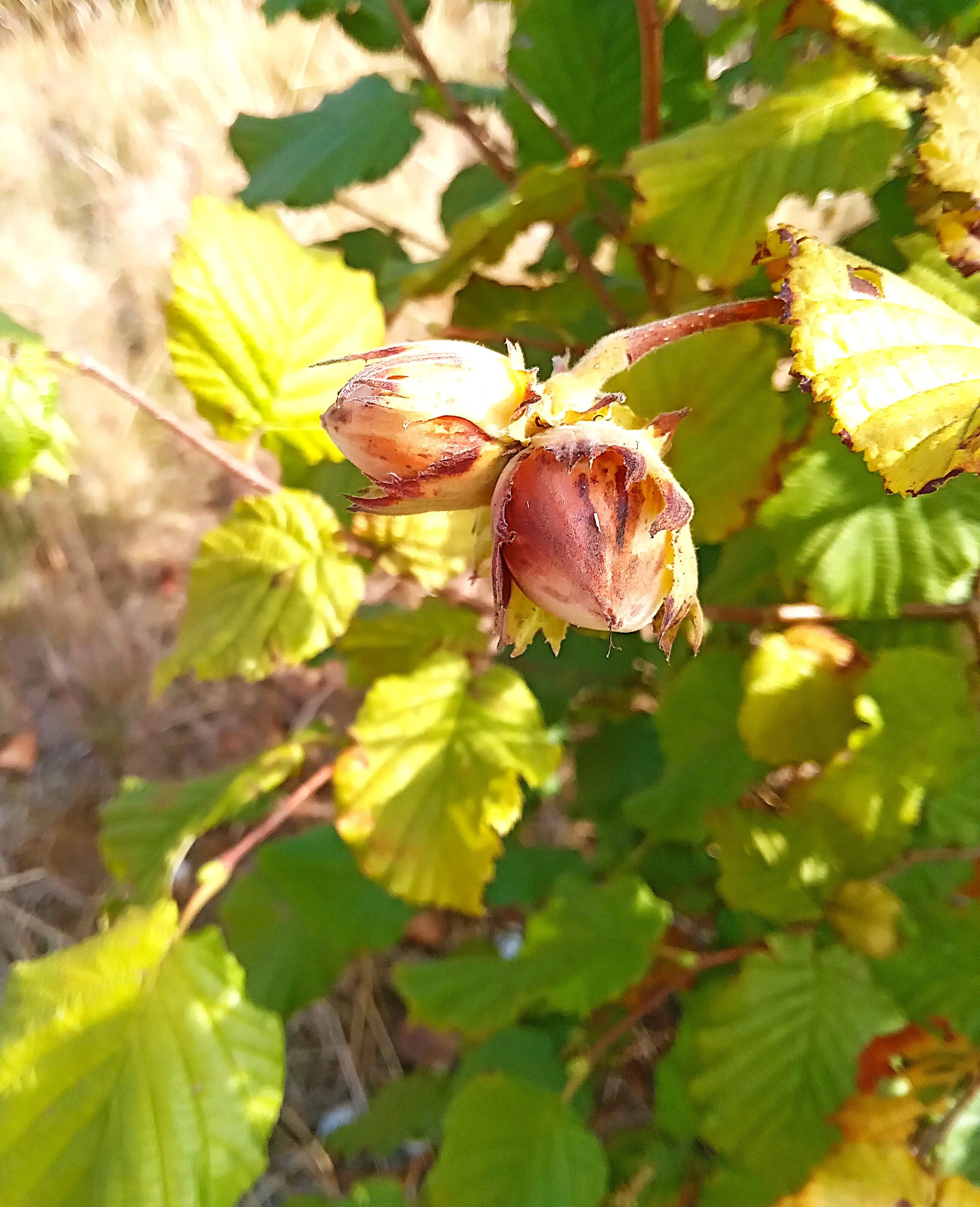
Hazel Nuts